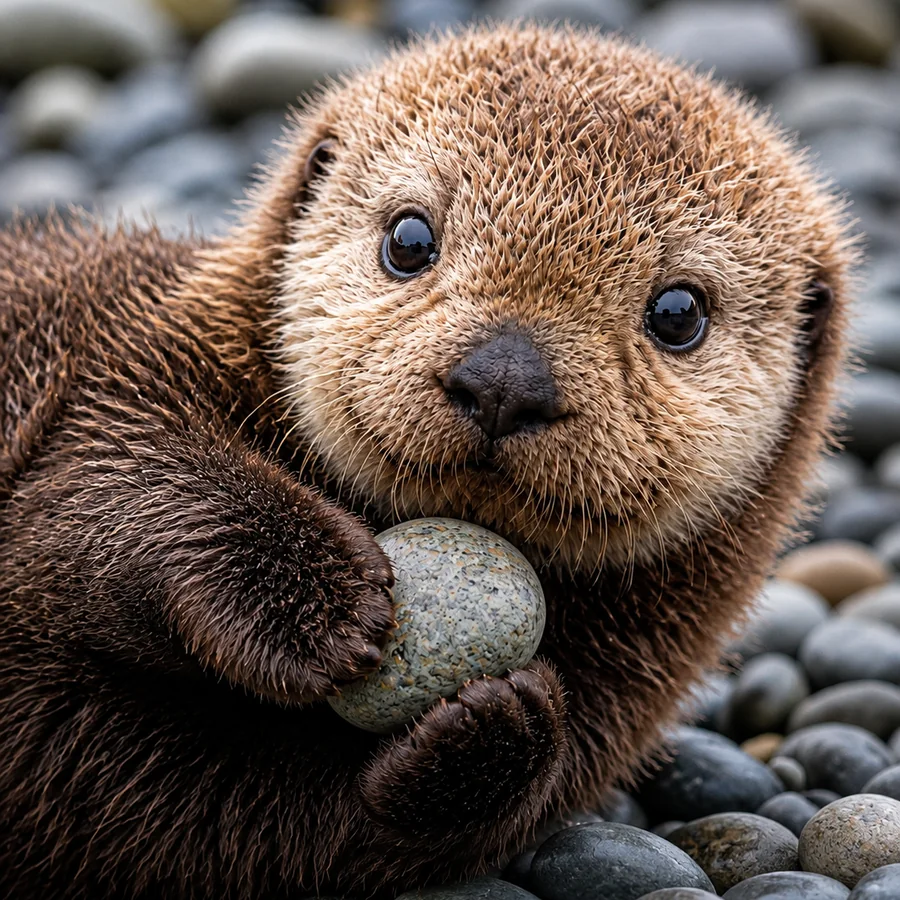
“Sea otters keep their favorite rock for life” is one of the internet’s most beloved animal facts. It is also a useful example of how a real behavior can become more romantic as it travels through social media.
The part supported by observation
Sea otters can carry stones and food in loose folds of skin beneath their forearms. An individual may retain the same stone through repeated prey-opening events or across a foraging bout. Otters can also show preferences for particular tools, prey-handling methods, and feeding locations.
The part that goes beyond the evidence
Science has not firmly established that each wild otter selects one portable rock and keeps that exact object for its entire life. Tracking a small stone over many years in a marine environment would be extremely difficult. Rocks are dropped, moved by waves, reused, and exchanged with the landscape.
The most accurate wording is less viral but more honest: sea otters can retain and reuse useful stones, sometimes repeatedly, while long-term lifelong ownership of one identified rock remains unproven.
Why the story continues to resonate
The favorite-rock idea works because people recognize themselves in it. We all carry objects, memories, relationships, rituals, and principles that help us feel oriented. A childhood keepsake, a lucky coin, a favorite tool, a song, or a trusted routine can become a portable piece of stability.
www.hodl.rocks/ uses the favorite rock as imaginative lore while clearly separating folklore from science. That distinction makes the brand stronger. We do not need to distort the animal to love the metaphor.
A better kind of meme
A good meme compresses an idea without pretending to replace the full truth. “Every otter has a rock” becomes an invitation: identify what helps you live, think, create, and care. Hold it with intention. Let go when facts require it. Do not confuse attachment with evidence.
HODL lesson: stories can inspire without masquerading as data. Keep the wonder and keep the footnotes.